
Diabetes Management During Monsoon: How to Keep Blood Sugar Under Control at Home
Karnataka Nursing Council Reg. No. 312786
BSc Nursing · 5+ years Apollo Hospital ICU · BLS/CPR Certified
Medically reviewed by Sumit Kumar, RN
India is the diabetes capital of the world with over 101 million diagnosed diabetic patients and another 136 million in the pre-diabetic stage. Managing diabetes is a year-round challenge, but the monsoon season brings unique complications that can destabilise blood sugar control even in well-managed patients.
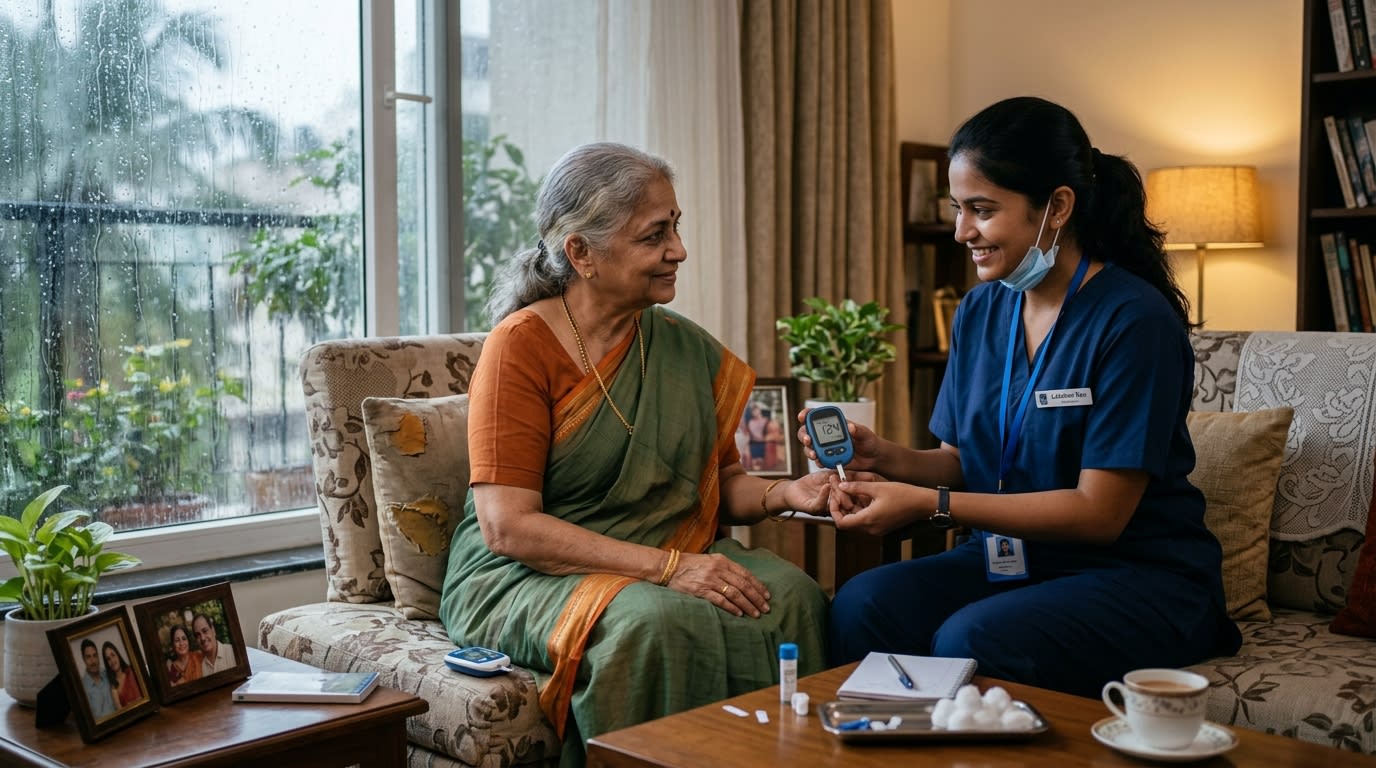
At NurseNest Plus, our home nursing professionals help diabetic patients across Bangalore maintain optimal glucose levels throughout the monsoon with personalised care, medication management, and round-the-clock monitoring.
Why Monsoon Is Dangerous for Diabetic Patients
The rainy season creates a perfect storm of challenges for diabetes management:
- Humidity affects insulin sensitivity – High humidity can cause unpredictable blood sugar fluctuations, making dose adjustments necessary
- Insulin storage risks – Power cuts during monsoon storms can compromise insulin storage (insulin must stay between 2–8°C)
- Increased infection risk – Diabetic patients are 2x more likely to develop fungal and bacterial infections in humid weather
- Foot complications – Wet feet, walking through puddles, and dampness dramatically increase the risk of diabetic foot ulcers
- Reduced physical activity – Rain disrupts walking routines, leading to higher post-meal blood sugar spikes
- Dietary changes – Craving for fried snacks (pakoras, samosas) during rain can spike glucose levels
- Waterborne illnesses – Diarrhoea and vomiting from contaminated water can cause dangerous hypoglycaemia in patients on medication
Essential Monsoon Diabetes Management Tips
1. Insulin Storage and Medication Safety
Insulin is a delicate medication that requires careful storage during power-cut-prone monsoon months:
- Keep unopened insulin vials in the refrigerator at 2–8°C; never freeze
- In-use insulin pens can be stored at room temperature (below 30°C) for up to 28 days
- Invest in a battery-operated cool pouch or insulin cooler bag for power-cut situations
- Never expose insulin to direct sunlight or leave it in a hot car
- Check insulin clarity before each use – cloudy or discoloured insulin should be discarded
- Keep a backup supply of oral medications and test strips in waterproof containers
2. Diabetic Foot Care During Monsoon
Diabetic foot infections are the leading cause of non-traumatic amputations in India. Monsoon multiplies this risk:
- Never walk barefoot – Even inside the house; wear clean, dry footwear at all times
- Avoid walking through puddles or stagnant water – Contaminated water can infect even minor cuts
- Inspect feet daily – Check between toes for cuts, blisters, cracks, redness, or fungal growth
- Wash and dry thoroughly – Clean feet with lukewarm water and mild soap; dry between toes carefully
- Moisturise – Apply diabetic-friendly foot cream on soles but NOT between toes (moisture between toes promotes fungal growth)
- Nail care – Cut nails straight across, not too short; visit a podiatrist for ingrown nails
- Seek immediate help if you notice any wound that doesn't heal within 48 hours, colour changes, or foul smell
3. Blood Sugar Monitoring – More Frequent During Monsoon
The unpredictability of monsoon demands tighter glucose monitoring:
- Test fasting blood sugar every morning (target: 80–130 mg/dL)
- Test post-meal blood sugar 2 hours after lunch and dinner (target: below 180 mg/dL)
- Monitor more frequently if you're unwell, have diarrhoea, or skip meals
- Keep a detailed glucose diary – note readings, meals, medication times, and any symptoms
- Share your glucose diary with your doctor during teleconsultations
- Keep your glucometer and strips dry – moisture can give inaccurate readings
- Get an HbA1c test every 3 months (target: below 7% for most patients)
4. Monsoon Diet for Diabetic Patients
Resist monsoon food cravings and follow a diabetes-friendly diet:
Foods to Include:
- Bitter gourd (karela) – Contains charantin that helps lower blood sugar naturally
- Fenugreek (methi) seeds – Soak overnight, consume on empty stomach; proven to reduce fasting glucose
- Green leafy vegetables – Spinach, amaranth, drumstick leaves (rich in fibre and low glycaemic index)
- Whole grains – Ragi dosa, oats upma, jowar roti instead of white rice and maida
- Protein-rich foods – Dal, sprouts, eggs, grilled chicken, paneer (stabilises blood sugar)
- Anti-inflammatory spices – Turmeric, cinnamon (½ tsp daily), cumin in cooking
Foods to Avoid:
- ❌ Fried snacks – pakoras, vadas, samosas (high in carbs and unhealthy fats)
- ❌ Sweet beverages – chai with sugar, fruit juices, sugarcane juice
- ❌ White rice in large quantities – switch to brown rice or millets
- ❌ Raw salads and cut fruits from outside – contamination risk during monsoon
- ❌ Street food – hygiene is compromised during rainy season
5. Exercise Alternatives for Rainy Days
Don't let rain stop your exercise routine – physical activity is essential for glucose control:
- Chair exercises – Seated leg raises, arm circles, and upper body stretches
- Indoor walking – Walk inside your home or apartment corridor for 15–20 minutes after meals
- Yoga – Surya namaskar (modified), pranayama, and diabetes-specific asanas
- Resistance exercises – Use resistance bands or water bottles for strength training
- Stair climbing – If safe, use your building stairs for 10-minute cardio sessions
- Aim for at least 150 minutes of moderate activity per week
6. Preventing Monsoon Infections
Diabetic patients have weakened immunity, making infection prevention critical:
- Drink only boiled or purified water – avoid unknown water sources
- Eat freshly cooked, hot meals – avoid leftovers and reheated food
- Maintain skin hygiene – shower after getting wet in rain; change damp clothes immediately
- Treat any cuts or wounds immediately with antiseptic and sterile dressing
- Watch for urinary tract infections (UTIs) – more common in diabetic women during monsoon
- Get flu vaccination before monsoon season if recommended by your doctor
Warning Signs – When to Seek Emergency Care
- 🚨 Blood sugar consistently above 300 mg/dL despite medication
- 🚨 Blood sugar below 70 mg/dL (hypoglycaemia) with confusion, sweating, or fainting
- 🚨 Foot wound with redness, swelling, warmth, or pus discharge
- 🚨 Persistent vomiting or diarrhoea for more than 24 hours
- 🚨 Fruity-smelling breath (sign of diabetic ketoacidosis – medical emergency)
- 🚨 High fever (above 101°F) lasting more than 2 days
How NurseNest Plus Helps Diabetic Patients During Monsoon
Our trained nurses provide comprehensive diabetic home care:
- Regular blood sugar monitoring – Fasting, post-meal, and random checks as per schedule
- Insulin administration – Proper injection technique, site rotation, and storage management
- Diabetic foot care – Daily inspection, cleaning, and wound dressing if needed
- Medication management – Ensuring zero missed doses of oral diabetes medications
- Diet monitoring – Helping patients follow prescribed meal plans and resist unhealthy cravings
- Exercise assistance – Supervised indoor exercises tailored to the patient's condition
- Doctor coordination – Sharing glucose logs and facilitating teleconsultations
- Emergency response – Trained to handle hypoglycaemic episodes and diabetic emergencies
NurseNest Plus – Keeping Diabetes Under Control, Rain or Shine